


Why Was the Nissan Rogue Sport Discontinued?
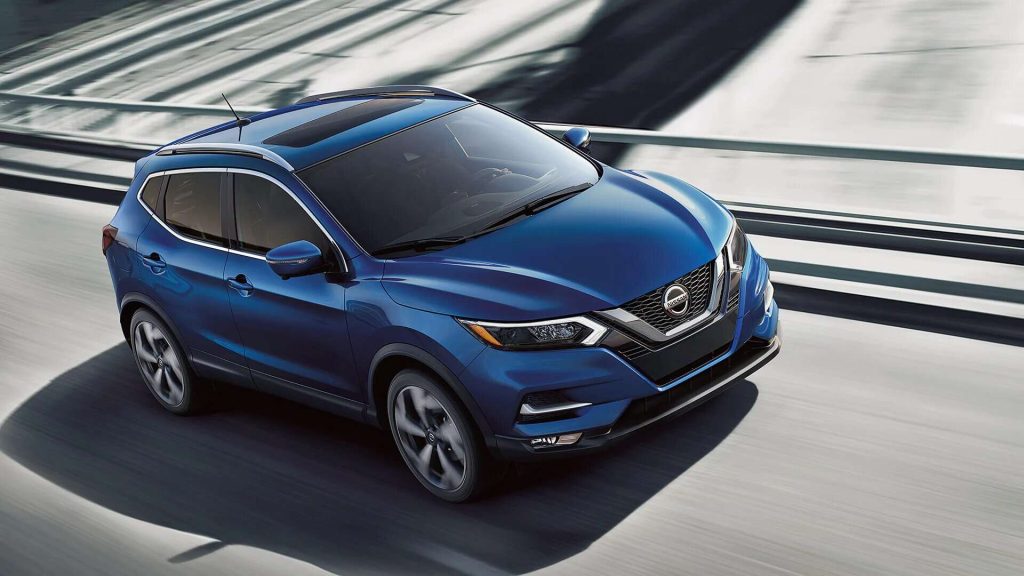
The Nissan Rogue Sport has been popular since its introduction in 2017. It combines the convenience of a smaller size with the performance of a larger SUV, making it an excellent choice for many drivers. Unfortunately, the production of the Rogue Sport has been discontinued, leaving many people wondering why it was so special.
Find out what made the Nissan Rogue Sport so special, as well as why the production of this vehicle has been discontinued.
Nissan Rogue Sport 2017The 2017 Nissan Rogue Sport is the first in its line and is designed to be a more compact version of the Nissan Rogue. Compared to the Nissan Rogue, the Rogue Sport is more compact and fuel-efficient, making it an excellent choice for those looking for a car for city driving. With a 2.0-liter 4-cylinder engine, it packs 141 HP power and is perfect for urban driving. The interior of the Rogue Sport is cozy enough to fit 4 adults comfortably or a family of 5, with features such as cruise control and a rearview camera.
Nissan Rogue Sport 2018The Nissan Rogue Sport 2018 is packed with features! From the front-wheel drive to the rear-wheel drive options and the standard 2.0-liter inline 4-cylinder engine, you’ll be sure to get the most out of your car. The cabin has a great infotainment system and comfortable seating, and the 2018.5 model has an enhanced emergency braking system. Plus, enjoy fuel efficiency of 25 MPG in the city and 32 MPG on the highway, making road trips and daily commutes more enjoyable!
Nissan Rogue Sport 2019The 2019 Nissan Rogue Sport is complete with a host of new features! Bluetooth-enabled infotainment systems, an all-new exterior color option, and emergency braking capabilities are just the start. Drivers can also benefit from the range of tech upgrades that prioritize safety. You can choose between FWD and AWD options to suit your needs. Under the hood, the 2019 Nissan Rogue Sport is powered by a reliable 2.0-liter inline 4-cylinder engine, just like the 2017 and 2018 models.
Nissan Rogue Sport 2020The 2020 Nissan Rogue Sport has been upgraded with a sleek exterior featuring smooth lines and large alloy wheels. Inside, you’ll be surrounded by luxury with a high-quality infotainment system and elegant upholstery. The powertrain remains unchanged, offering a reliable 2.0-liter 4-cylinder engine with 141 HP power. This vehicle is available in FWD, and AWD trims, making it perfect for cruising around Atlanta, GA.
Nissan Rogue Sport 2021The 2021 Nissan Rogue Sport is the perfect car for those who want the ideal balance of style, power, and safety. With three trims, each offering both FWD and AWD, you can mix and match the features to get the perfect car for your needs. The model features a 2.0-liter 4-cylinder engine, producing 141 HP power, and comes in various eye-catching exterior colors. On top of this, the interior has been improved, and there is a range of safety features, such as emergency braking, more powerful headlights, and cruise control, to ensure you get to your destination safely.
Nissan Rogue Sport 2022The 2022 Nissan Rogue Sport is the pinnacle of the Nissan Rogue Sport line. With three distinct trim levels, drivers can choose between either front-wheel drive or all-wheel drive. The Rogue S, SV, and SL all come with a powerful 2.0-liter four-cylinder engine and a stunning exterior. The Rogue Sport includes features such as a cutting-edge infotainment system and luxurious upholstery.
Used SUVs For Sale in Doraville, GeorgiaWhy Did Nissan Stop Production of The Rogue Sport?
Sad news for Nissan Rogue Sport fans: The 2023 Nissan Rogue Sport will no longer be available. In 2022, Nissan decided to shift its focus to electric cars and larger SUVs, which means the beloved Rogue Sport is no more. But don’t despair if you’re in the Atlanta area! Mike Rezi Nissan of Atlanta has a wide selection of used and new Nissan Rogue Sports for sale, so you can take one for a spin and experience the joy of this powerful and sleek ride. Come in and see what we have!
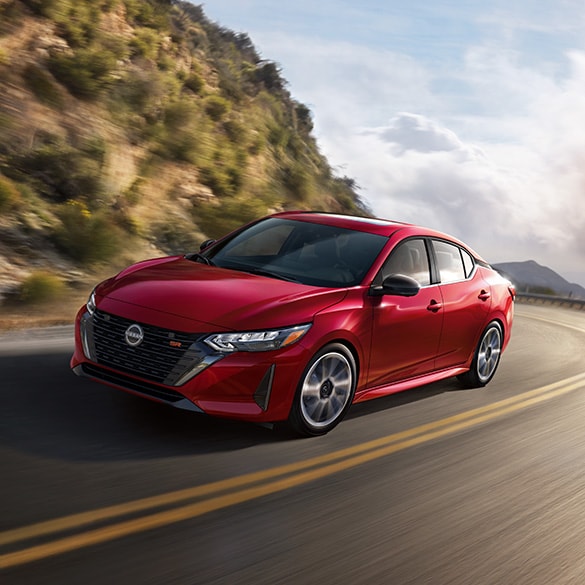
A properly functioning Nissan Sentra radiator fan is critical for keeping your engine cool and preventing overheating. If your fan fails, your Nissan Sentra can experience temperature spikes, reduced performance, and even engine damage. In this guide, we will walk you through the steps to diagnose a failing fan, understand the causes of a Nissan Sentra radiator fan not working, and replace the radiator fan safely. However, if you need immediate, accurate replacement services, you can always rely on Mike Rezi Nissan Service Department, available 24/7!
Why is My Nissan Sentra Failing to Cool Down?
Overheating can result from several issues, with a malfunctioning Nissan Sentra radiator fan motor being one of the most common. Other potential causes include:
-
Low coolant levels
-
Thermostat failure
-
Blocked radiator
-
Faulty water pump
When your fan isn’t working, it leads to insufficient airflow through the radiator, which prevents proper engine cooling, causing your Nissan Sentra to overheat.
Signs Your Radiator Fan May Be Bad
-
Engine temperature is rising quickly.
-
AC performance drops while idle.
-
The fan is not spinning when the engine is hot.
-
Burning smell or unusual noises under the hood.
Diagnosing the Radiator Fan Problem
Step 1: Visual Inspection
-
Check for debris blocking the fan blades.
-
Inspect the wiring harness for frays or corrosion.
-
Look for signs of physical damage on the fan blades.
Step 2: Test the Radiator Fan
-
Turn on the AC when idle; the fan should engage automatically.
-
If the fan doesn’t spin, check the fuse and relay connected to the radiator fan in the Nissan Sentra.
Step 3: Inspect the Radiator Fan Motor
-
A failing Nissan Sentra radiator fan motor will often make a grinding or clicking noise.
-
Use a multimeter to check for power reaching the motor.
Step 4: Additional Checks
-
Check the temperature sensor; if faulty, it may not trigger the fan.
-
Confirm the fan clutch is functioning if your model has one.
How Can I Replace the Radiator Fan on a Nissan Sentra?
Replacing the fan is a moderate DIY task if you are comfortable with engine components. Otherwise, seek professional help.
Tools and Materials Needed
-
Screwdrivers (Phillips and flathead)
-
Socket set
-
Replacement Nissan Sentra radiator fan
-
Pliers
-
Work gloves
-
Coolant catch pan
Step 1: Safety First
-
Ensure the engine is cool.
-
Disconnect the battery to prevent electric shock.
Step 2: Remove the Radiator Cover and Components
-
Remove any plastic shrouds covering the radiator.
-
Disconnect the Nissan Sentra’s radiator fan motor electrical connector.
-
Remove any brackets holding the fan in place.
Step 3: Remove the Bad Fan
-
Carefully lift out the old fan.
-
Inspect for any damage to the radiator or surrounding hoses
Step 4: Install the New Radiator Fan
-
Place the new radiator fan in position.
-
Secure it with bolts and brackets.
-
Reconnect the electrical connector.
Step 5: Test the New Fan
-
Reconnect the battery.
-
Start the car and let it reach operating temperature.
-
Verify the fan engages and runs smoothly.
Step 6: Reassemble
-
Replace any removed shrouds or covers.
-
Ensure all tools and debris are cleared from the engine bay.
Preventative Measures to Avoid Overheating
-
Regular Coolant Checks: Low coolant can worsen fan failure.
-
Clean the Radiator: Remove debris to allow proper airflow.
-
Inspect Fan Wiring: Avoid corrosion and frayed wires.
-
Check Temperature Sensors: Ensure the fan triggers at the right time.
-
Routine Maintenance: Replace worn hoses and clamps to prevent leaks.
Comparison Table: Radiator Fan Symptoms and Fixes
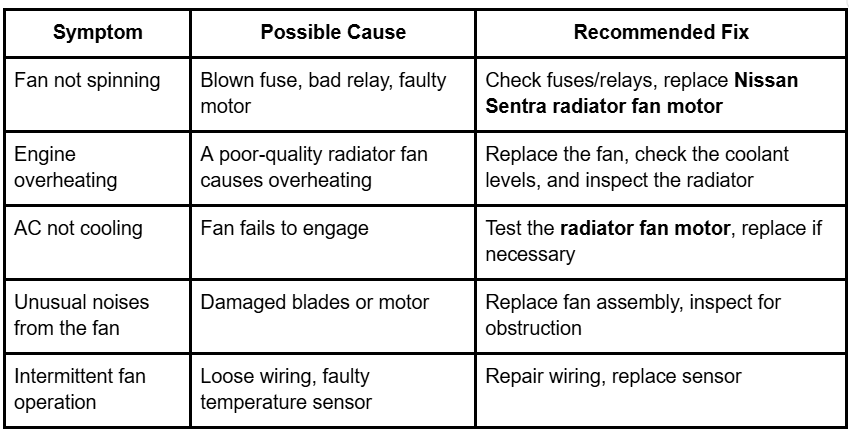
When you have Mike Rezi Nissan, there is nothing to worry about. We have adept technicians who specialize in Nissan machinery and engine tech. To contact them, simply schedule a service and receive a durable and reliable replacement immediately.
Frequently Asked Questions (FAQs)
Q1: Can a bad radiator fan cause overheating?
Yes, a radiator fan not working or a car overheating
is a common symptom. The fan draws air through the radiator to lower the
coolant temperature, especially at low speeds or idle.
Q2: How do I know if my Nissan Sentra radiator fan motor is bad?
Listen for grinding noises, inspect for damage, and test electrical power.
If it doesn’t run when powered, it likely needs replacement.
Q3: Can I replace the radiator fan in the Nissan Sentra myself?
Yes, with basic mechanical skills, proper tools, and safety precautions.
Ensure the engine is cool and the battery is disconnected.
Q4: Why is my Nissan Sentra overheating even with a new fan?
Other issues may include low coolant, a blocked radiator, a faulty
thermostat, or water pump failure. Check all cooling system
components.
Q5: How often should I inspect the radiator fan?
Routine checks during oil changes or cooling system maintenance are
recommended. Inspect fan blades, motor, and wiring annually.
Q6: Is it normal for the fan to run continuously when the AC is on?
Yes, the fan should engage to provide airflow through the condenser and
radiator when the AC is active.
Q7: What is the cost range for replacing a Nissan Sentra radiator
fan?
Costs vary based on model and location, and it depends on the repair or
replacement factor as well.
Replacing a Nissan Sentra radiator fan is essential to prevent overheating and maintain engine performance. Diagnosing a faulty fan involves inspecting the motor, wiring, fuses, and temperature sensors. Proper installation of a new radiator fan for Nissan Sentra ensures your vehicle stays cool and efficient, reducing the risk of damage to expensive engine components.
If you experience a persistent Nissan Sentra overheating issue or are unsure about DIY replacement, visit Mike Rezi Nissan for professional diagnostics and repair.
Schedule a service today and ensure your vehicle stays in pristine condition!
Why Is Nissan’s 2026 Lineup a Game-Changer?
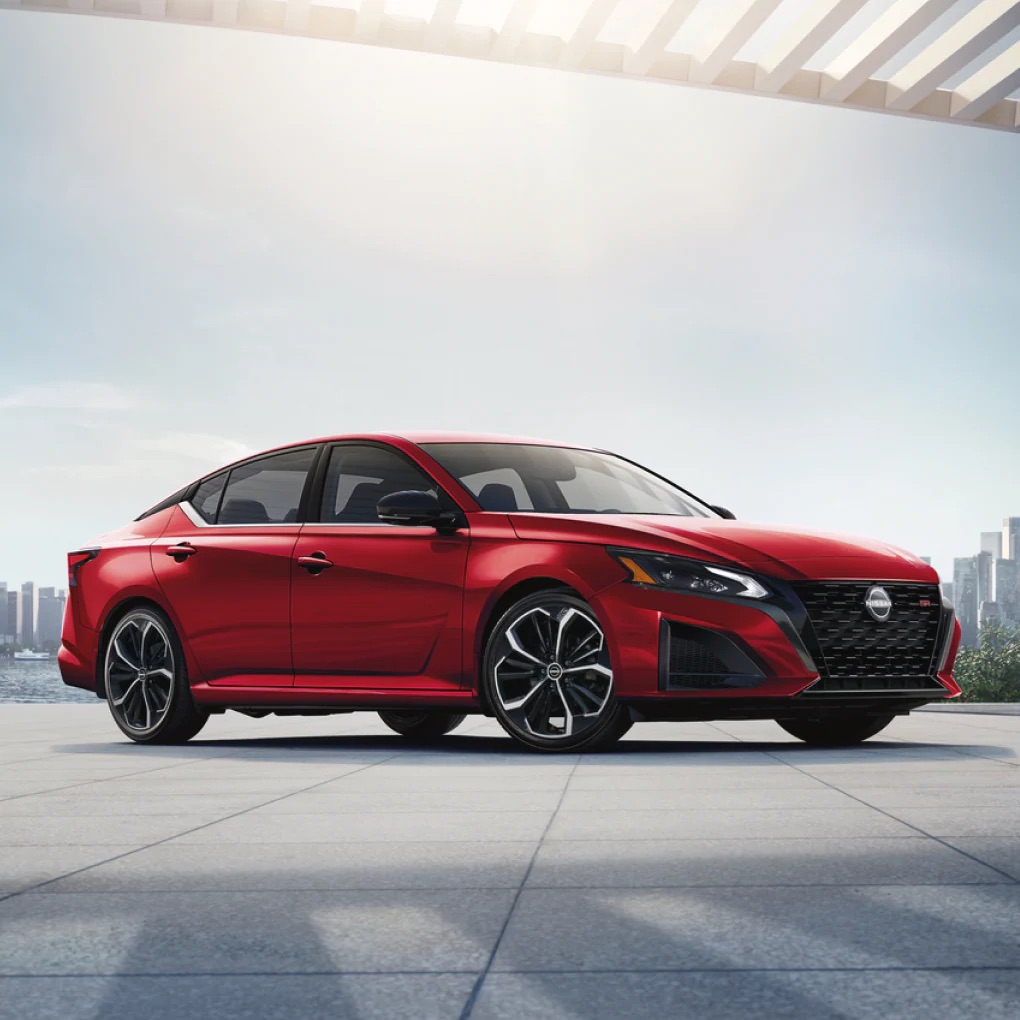
As the automotive landscape evolves, 2026 marks a pivotal moment for Nissan. From SUVs to sedans, Nissan’s strategic redesign initiative redefines aesthetics, technology, and efficiency. This transformation, driven by consumer demand, sustainability goals, and a bold vision for the future, goes beyond mere aesthetics.
At Mike Rezi Nissan, we’re thrilled to showcase this exciting journey. Curious about what these changes mean for your next vehicle? Here’s an in-depth look at Nissan’s 2026 redesign strategy.
Sleek and Purposeful Design Language
Nissan’s new design philosophy, “Efficient Dynamism,” features sculpted forms that convey energy and purpose. Clean lines, bold silhouettes, and refined surfaces create a premium, confident presence across the lineup.
- Sharper Front Fascias: Headlights seamlessly blend into the grille, creating a unified, modern aesthetic.
- Athletic Proportions: Sedans feature longer, lower rooflines for a coupe-like silhouette, while SUVs boast sturdy wheel arches and rising beltlines for visual stability.
- Updated Emblems & Accents: A refreshed Nissan logo, larger alloy wheels, and “floating” roof designs enhance the contemporary feel.
Excited to explore these models? Visit our new inventory to discover the latest launches!
Advanced Technology: Smarter and Safer
Technology is at the heart of Nissan’s 2026 redesign, meeting modern drivers’ expectations for safety, convenience, and connectivity.
Digital Cockpit Hub
Nissan integrates infotainment and driver aids into a seamless, intuitive digital interface, including:
- Sleek dual displays with a configurable gauge cluster and large central touchscreen.
- Physical shortcut controls for quick access to essential functions.
- Over-the-air software updates to keep vehicles improving over time.
Enhanced Driver-Assist Features
Nissan’s proprietary i-Sense platform introduces advanced capabilities:
- Highway Driving Assist: Smarter adaptive cruise control with lane-centering.
- Intersection Safety Assist: Alerts drivers to cross-traffic hazards during turns.
- Pavement Recognition Assist: Ensures proper alignment within lane markings.
These features make driving safer, less fatiguing, and more connected, aligning with global trends toward partial autonomy while preserving the joy of driving.
Powertrain Upgrades: Efficiency Meets Performance
Nissan is enhancing its powertrain lineup with hybrid and electric options, balancing efficiency with driving dynamics.
Hybrid Models
Hybrid versions of the Rogue, Altima, and Sentra offer:
- Lower carbon emissions.
- Improved fuel efficiency for commuting and long drives.
- Seamless power delivery with electric motors supporting gasoline engines.
Electric and Plug-In Options
Nissan is expanding its electric vehicle portfolio:
- Plug-in hybrids with over 50 miles of electric range for mid-size models.
- Continued evolution of the Nissan Leaf and new battery-electric vehicles for zero-emission driving.
This strategy aligns with market preferences and global emissions goals, keeping drivers in control of the transition.
Shared Platforms for Efficiency
Nissan employs smart engineering by sharing key architectures across models, maintaining unique character while optimizing efficiency.
- CMF-C Platform: Supports SUVs like the Rogue, enabling hybridization and all-wheel-drive compatibility.
- CMF-B/H Platforms: Used in Sentra and Versa for lightweight, efficient designs with advanced safety features.
- Unified EV Architecture: Scalable platforms for battery-electric vehicles, supporting long-range and fast charging.
This approach reduces costs, improves quality, and accelerates future development.
Premium and Personalized Interiors
Nissan’s interiors feature premium materials like soft-touch surfaces, hidden stitching, and refined trims, rivaling luxury benchmarks. Ambient lighting, larger windows, and sculpted seats enhance comfort and cabin atmosphere.
Expanded personalization options include a variety of trim accents, upholstery combinations, and interior finishes that complement the exterior’s sharp aesthetics.
For drivers in Cincinnati, these enhancements deliver a refined, reasonably priced driving experience.
Sustainable Manufacturing
Nissan’s redesign prioritizes sustainability with increased use of recycled plastics, lighter materials, and eco-friendly production processes.
Globally, Nissan aims for carbon-neutral manufacturing. North American buyers can expect:
- Reduced-vinyl seats and natural-fiber carpets.
- Minimized single-use packaging and sustainable materials.
- Modular electric powertrain upgrades to reduce future waste.
These eco-conscious choices resonate with buyers in Florence and Middletown, where sustainability influences purchasing decisions.
2026 Model Line Highlights
Here’s a glimpse of Nissan’s redesigned 2026 models:
- Sentra, Altima: Sleeker exteriors, hybrid powertrains, and upscale interiors rivaling luxury sedans.
- Rogue, Murano: Sporty fascias, hybrid and plug-in options, and intuitive digital cockpits.
- Maxima: A bold return with aggressive styling, performance enhancements, and advanced tech.
- EV Family: Continued Leaf evolution and new EV crossovers with shared, scalable technology.
Each model evolves thoughtfully, preserving Nissan’s signature appeal while enhancing functionality.
Why Nissan’s 2026 Redesign Matters
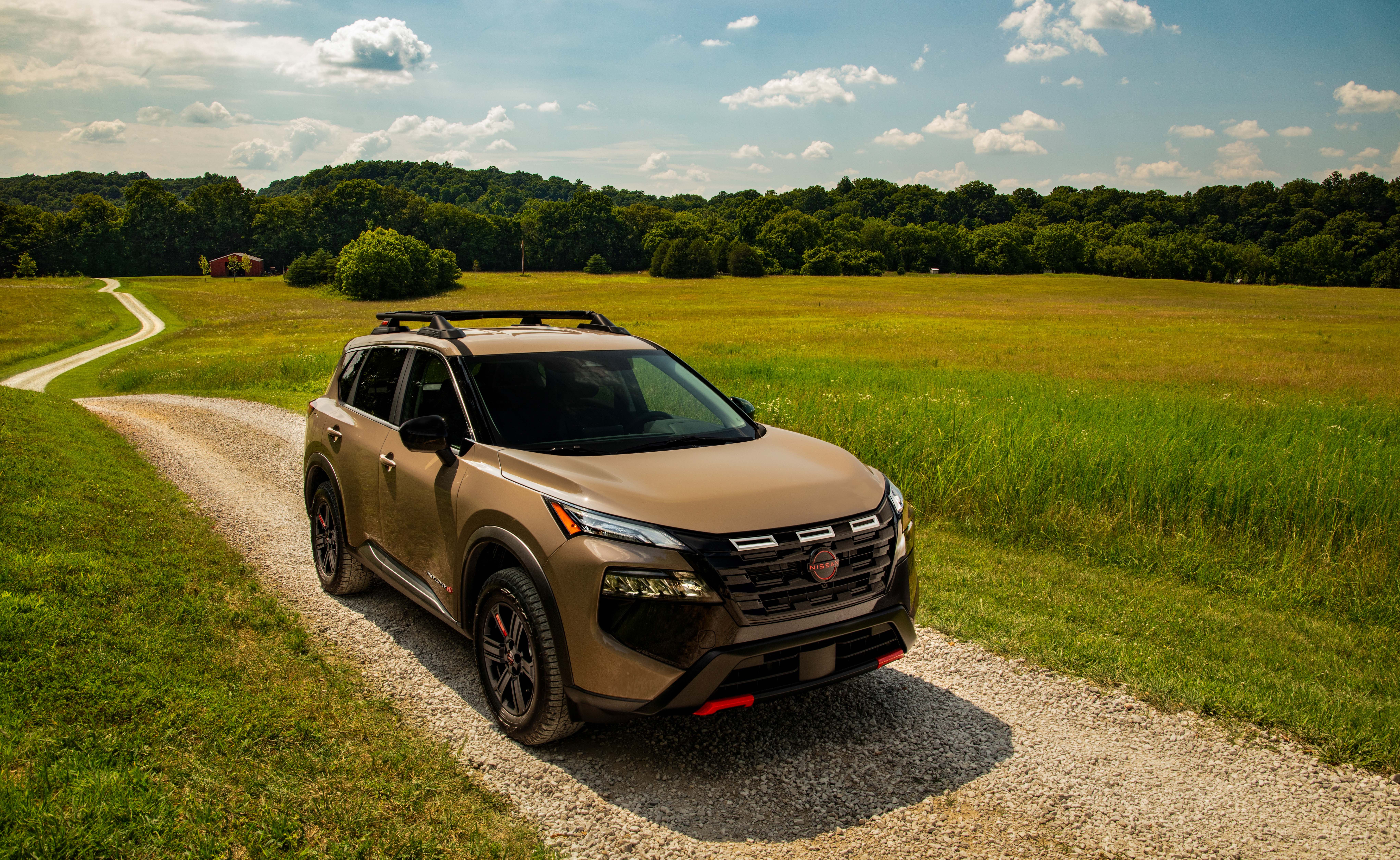
Nissan’s 2026 redesign goes beyond aesthetics and gadgets, focusing on:
- User Experience: Sleek designs and intuitive technology enhance every journey.
- Economics: Hybrids and efficient platforms lower fuel costs and improve resale value.
- Future Readiness: Plug-in hybrids and EVs adapt to evolving infrastructure and needs.
- Brand Appeal: Premium cabins and modern tech refresh Nissan’s image without luxury pricing.
Nissan is shaping the future of driving. Explore the new inventory at Mike Rezi Nissan to experience these modern, feature-rich designs.
Nissan’s 2026 redesign strategy blends sleek design, advanced technology, efficiency, and sustainability to meet modern drivers’ needs while ensuring reliability and longevity.
At Mike Rezi Nissan, step into a driver’s seat where sleek surfaces, responsive technology, and efficient hybrid powertrains bring this vision to life. Contact us to explore these future-ready vehicles today!
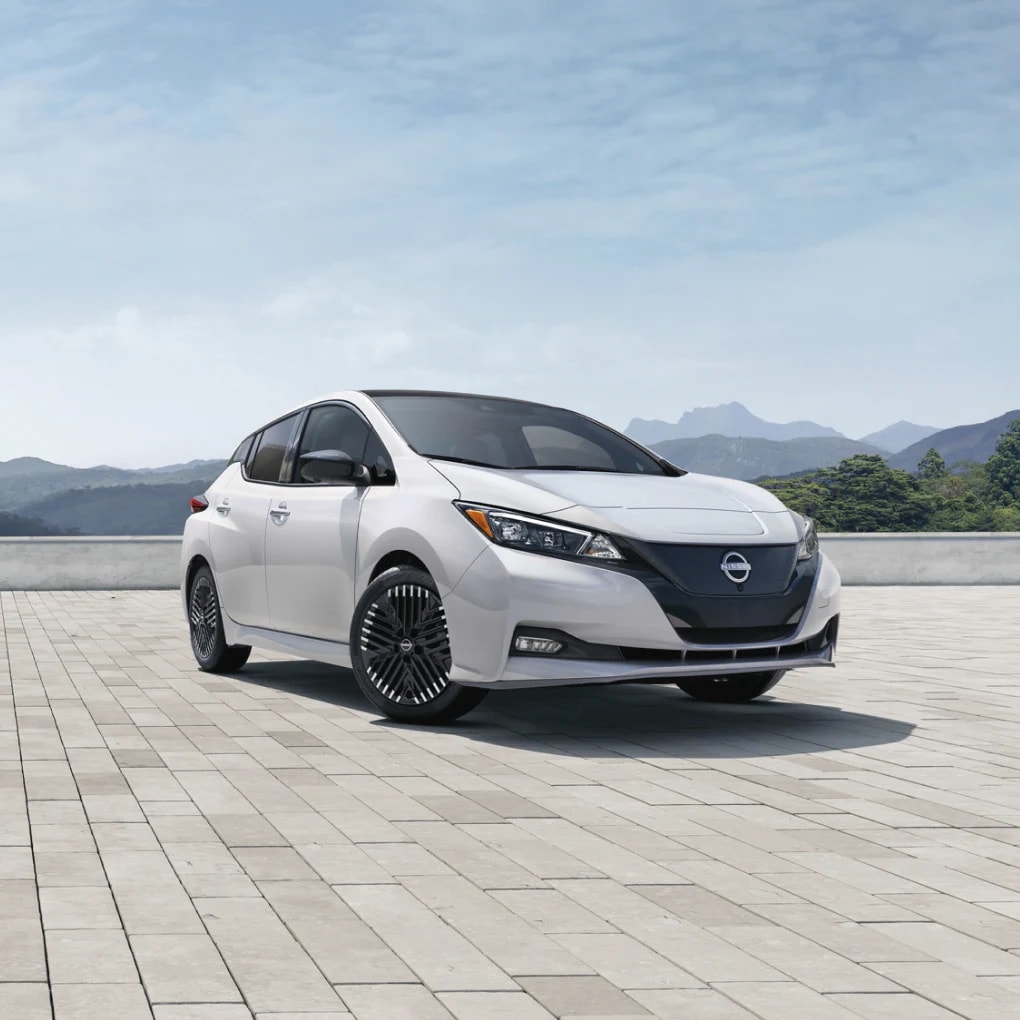
Shopping for a new car already involves making many decisions. With headlines about global trade and rising tariffs, many buyers are now wondering: “Will tariffs impact the price of my next Nissan?”
At Mike Rezi Nissan of Atlanta, we understand the confusion. While Nissan has strong U.S. manufacturing roots, international trade still plays a significant role in determining vehicle prices, especially in terms of parts and production materials.
If you’re considering a Nissan in 2025, this guide will help you understand what tariffs could mean for pricing, how to plan your budget, and when it might be best to buy.
How Tariffs Can Affect Car Prices
A tariff is a tax on goods imported from another country. In the automotive world, this can include:
- Fully assembled vehicles
- Specific components like electronics or batteries
- Raw materials such as steel or aluminum
Even if your Nissan is built in the U.S., some of its parts may be sourced globally. That means tariffs can influence the cost of production, which may be reflected in the vehicle’s Manufacturer’s Suggested Retail Price (MSRP).
Nissan’s Manufacturing Strategy in the U.S.
Here’s good news for Nissan buyers in Georgia: many of the most popular Nissan models are manufactured in North America. That includes:
- Nissan Altima – Assembled in Canton, Mississippi
- Nissan Rogue – Built in Smyrna, Tennessee
- Nissan Pathfinder – Also produced in Smyrna, Tennessee
- Nissan Frontier – Made in Canton, Mississippi
This domestic production helps shield most Nissan models from heavy import tariffs. However, trims with international components, especially those with advanced electronics or hybrid systems, may still experience price fluctuations. If you’re interested in models built in the U.S., visit Mike Rezi Nissan of Atlanta to explore your options!
What Causes Prices to Rise Beyond Tariffs?
Tariffs are just one part of the pricing puzzle. Other factors include:
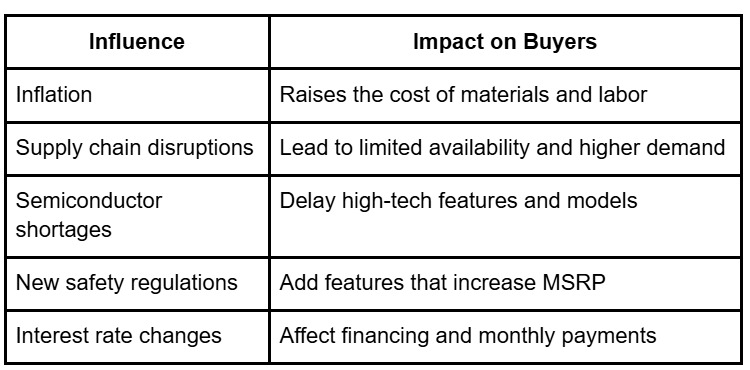
Thinking of financing your next vehicle? Explore pre-approval options at Mike Rezi Nissan of Atlanta!
Budgeting Tips for Tariff-Affected Market Conditions
Even with external pricing pressures, there are still ways to make a smart and confident purchase. Here’s how to stay ahead of the curve.
1. Act Early When You Find a Deal
Prices can shift quickly. If you see a Nissan you love at a price that works, it’s often better to act sooner rather than later. Delays could result in higher prices for the same model due to limited availability or additional tariff effects.
2. Consider In-Stock Inventory
Vehicles already on the lot were priced based on previous production costs. Buying now means you can avoid potential price increases on future shipments.
3. Lock in Financing Rates
Interest rates can rise with inflation and global instability. Securing financing now could save you hundreds over the term of your loan.
Are Tariffs Affecting Used and Certified Pre-Owned Nissans?
Pre-owned vehicles aren’t directly affected by tariffs since they’ve already been imported and priced. However, higher new car prices can increase demand and pricing for used models too.
That’s why our Nissan Certified Pre-Owned (CPO) models are in high demand. They offer:
- Factory warranty coverage
- 167-point inspection
- Lower pricing than new models
- No tariff-related pricing volatility
Browse available CPO Nissans at Mike Rezi Nissan of Atlanta’s all-used inventory to compare prices, models, mileage, trims, and years!
FAQs: Nissan Prices and Tariffs
Q: Are all Nissans affected by tariffs?
No. Many are built in the U.S. and are insulated from tariffs. However, some trims or packages may include globally sourced parts that could be impacted.
Q: Will tariffs raise prices in 2025?
Possibly. Trade conditions are evolving, and some automakers have announced projected increases due to higher costs for parts and logistics.
Q: How can I avoid tariff-related increases?
Buy in-stock vehicles and secure financing now. Consider Certified Pre-Owned if you’re looking for long-term reliability without new model pricing.
How Global Market Shifts Could Influence Future Nissan Prices
While tariffs are a major factor today, it’s important to recognize that the global automotive market is constantly evolving, and these shifts could continue to influence Nissan pricing over the next few years. Factors such as international trade agreements, currency fluctuations, and material shortages all contribute to the cost of manufacturing vehicles.
For example, if the U.S. dollar weakens against foreign currencies, the cost of imported parts could rise even further, independent of tariffs. Similarly, supply chain disruptions in key markets, such as Asia or Europe, could impact the availability and cost of electronic components, batteries, and raw materials like aluminum and steel. These changes affect production expenses and, ultimately, the sticker price of your next vehicle.
Nissan’s Strategy
Nissan’s strategy of strengthening its U.S. production footprint helps protect buyers to some extent, but no brand is completely immune to global pressures. Planning your purchase with these market realities in mind can make a big difference. Acting while incentives are available, inventories are stable, and interest rates are favorable may save you more than simply waiting for a future model year.
At Mike Rezi Nissan of Atlanta, we closely monitor these trends to help you make the most informed and confident decision possible.
While tariffs may influence car prices, savvy shoppers can still find value and stability, especially when they choose a brand like Nissan, which has a strong U.S. manufacturing presence. At Mike Rezi Nissan of Atlanta, we’re here to help you navigate the market with clarity and confidence. From budgeting and pre-approvals to certified models and trade-in support, we’ll help you make the right decision for today and the long run.
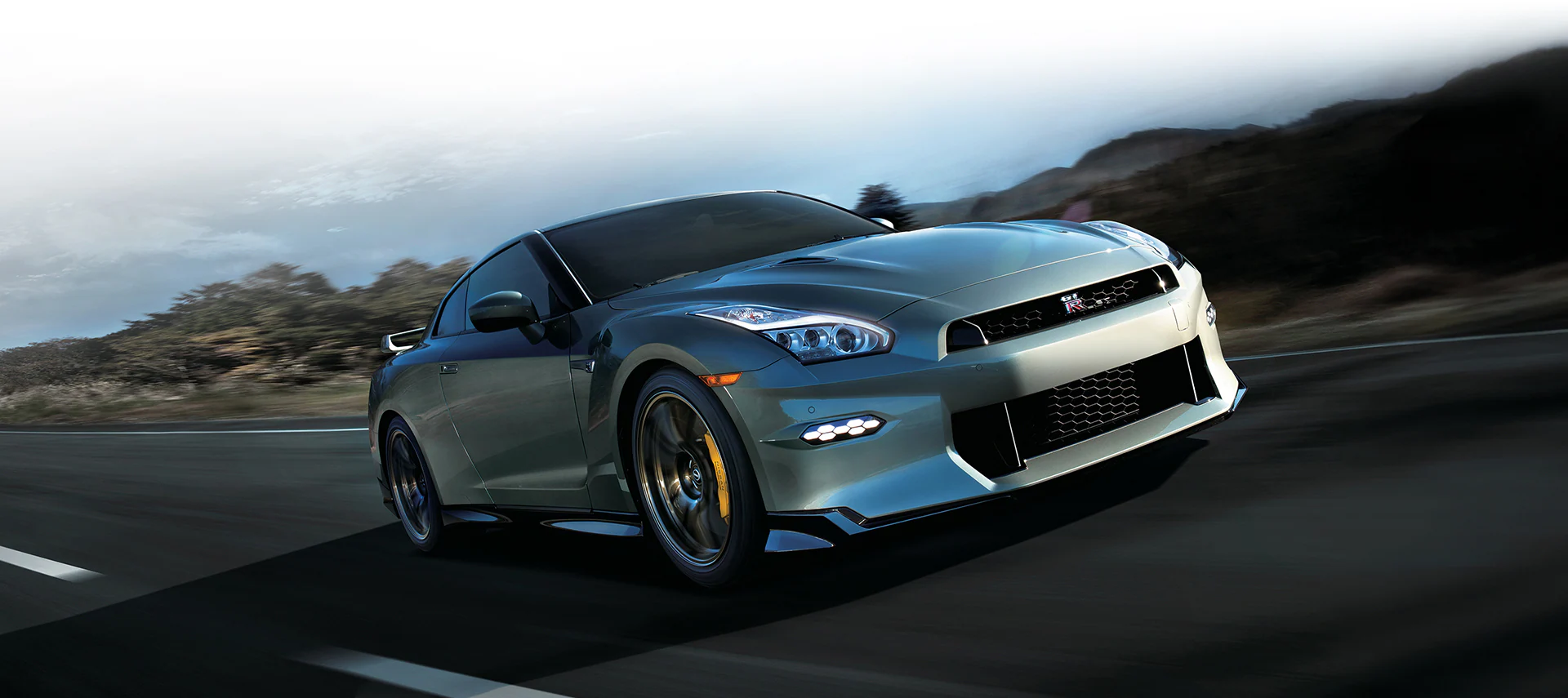
2025 marked the end of two legendary Nissan nameplates: the GT-R sports car and the Titan full-size pickup. Each had its loyal fan base, unique capabilities, and a strong identity within the brand. Their discontinuation marks a significant turning point for Nissan and the broader automotive landscape.
While some drivers were caught off guard, Nissan’s decision to retire the GT-R and Titan wasn’t made lightly. Evolving regulations, market demands, and a broader transition toward electrification shaped it. In this deep dive, we’ll look at why these vehicles were sunset, what will take their place, and how this decision impacts drivers in Atlanta and beyond.
A Legacy Worth Remembering
Before getting into the “why,” it’s worth recognizing what these two vehicles represented for Nissan.
Nissan GT-R: A Supercar Without the Supercar Price
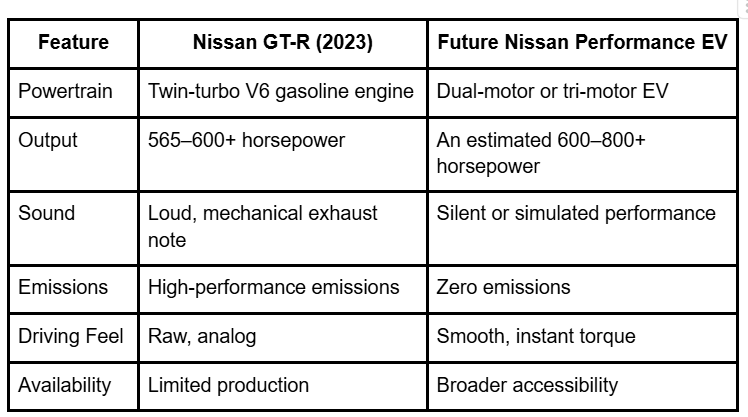
The GT-R launched in the U.S. in 2008, bringing with it a reputation earned on Japanese roads and racetracks. Known as “Godzilla,” the GT-R was a twin-turbocharged AWD performance beast that could rival Ferraris and Lamborghinis at a fraction of the price.
With its aggressive styling, advanced engineering, and motorsports-inspired handling, the GT-R carved out a niche that blended exotic-level performance with daily drivability. It was unapologetically bold, especially in its final trim, pushing over 565 horsepower.
Nissan Titan: The Underdog with Muscle
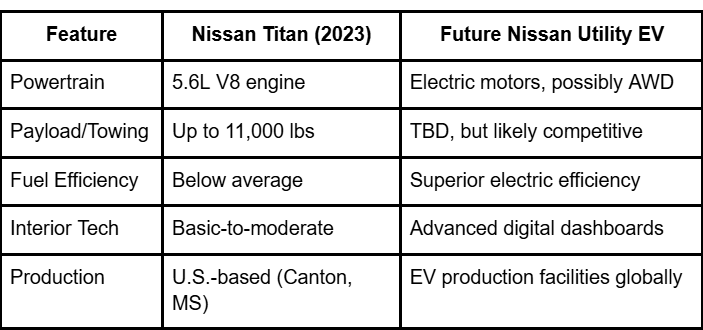
First introduced in 2004, the Titan entered a highly competitive truck market dominated by American heavyweights. But it stood out with its powerful V8, impressive towing capacity, and no-nonsense rugged design. Built in the U.S., it aimed to give buyers a real alternative to the traditional players.
Although it never outsold its rivals, the Titan earned respect for its durability and simplicity, especially among truck owners who valued functionality over flash.
So Why Were They Discontinued?
The short answer: Nissan is preparing for a new chapter one defined by electrification, efficiency, and modernized platforms. The long answer involves several major shifts that have reshaped the brand’s direction.
1. A Shift Toward Electrification
Nissan has made it clear: the future is electric. With goals to electrify a majority of its global lineup over the next decade, the company is investing heavily in new EV platforms, battery technologies, and production facilities and keeping aging gasoline models like the GT-R and Titan on life support simply no longer aligned with this strategy.
Both the GT-R and Titan were designed long before today’s EV revolution. Updating them to meet modern efficiency, emission, and tech expectations would have required massive reengineering, something Nissan chose not to pursue as it prioritizes forward-looking investments.
2. Market Realities and Sales Declines
Let’s face it: the GT-R and Titan weren’t volume sellers in recent years.
-
The GT-R, while still loved by enthusiasts, became a niche vehicle. Its price climbed, and its appeal narrowed to performance purists.
-
The Titan, despite solid capability, never quite captured market share from the dominant trio of Ford, Ram, and Chevy. Sales continued to dip, especially as the truck market became increasingly tech- and trim-focused.
In both cases, Nissan’s decision to exit came down to ROI. Instead of pouring more money into refreshing low-volume products, the brand is focusing on expanding segments like electric crossovers and sedans.
3. Regulatory Pressure and Emissions Standards
Both vehicles faced increasing pressure from global regulatory agencies. Performance engines like the GT-R’s twin-turbo V6 and the Titan’s V8 are more complex to justify under stricter CO2 and fuel economy rules.
Rather than reengineer them or downsize engines, Nissan chose to move on. This also enables the brand to avoid fines and reduce its overall fleet emissions, thereby increasing its flexibility for new product launches.
What’s Next? A Look Toward the Future
The retirement of these models doesn’t leave a void; it opens a door.
For the GT-R: Rumors of a Silent Successor
Nissan has hinted at future high-performance EVs. Industry speculation suggests that the GT-R’s spiritual successor could be fully electric, offering instant torque and all-wheel drive in a new, battery-powered package.
While a new performance EV hasn’t been officially confirmed, concept cars and plans suggest that Nissan is working on something bold. The next generation of Nissan speed may not roar, it may hum, but it will be no less thrilling.
For the Titan: Focus on Midsize and Utility EVs
Nissan is also refocusing on more profitable, global platforms. The Frontier, the brand’s midsize truck, recently received a complete redesign and remains a strong seller. It offers a practical, rugged alternative without the full-size footprint.
In the future, Nissan is expected to introduce all-electric utility vehicles and even EV trucks. These would be better suited to current buyer needs and more aligned with regulatory trends.
Comparing Yesterday’s Icons to Tomorrow’s EVs
What Drivers in Atlanta Should Know
If you’re in Atlanta or the surrounding region and have been a long-time fan of these models, you still have options and time.
-
Certified pre-owned GT-Rs and Nissan Titans will continue to be available for the foreseeable future.
-
Mike Rezi Nissan of Atlanta will continue to service and support these vehicles with genuine parts, trained technicians, and complete warranty programs.
-
Now is an excellent time to explore remaining inventory or even collect one of the final production models, especially for GT-R fans looking for a piece of automotive history.
At the same time, EV incentives and infrastructure are expanding across Tennessee. Nissan’s EV lineup, including models like the Ariya and upcoming utility EVs, provides a chance to future-proof your vehicle investment.
These vehicles helped define what Nissan stood for: performance, strength, and innovation. As the brand pivots to electrification, it’s doing so with a clear vision: to bring emotion, power, and connection into the era of electric vehicles. Whether you’re a die-hard fan of gas-powered performance or a curious newcomer to electric cars, Mike Rezi Nissan Atlanta is here to guide you. From the legacy of yesterday’s icons to the promise of tomorrow’s innovations, the road ahead has never looked more exciting.
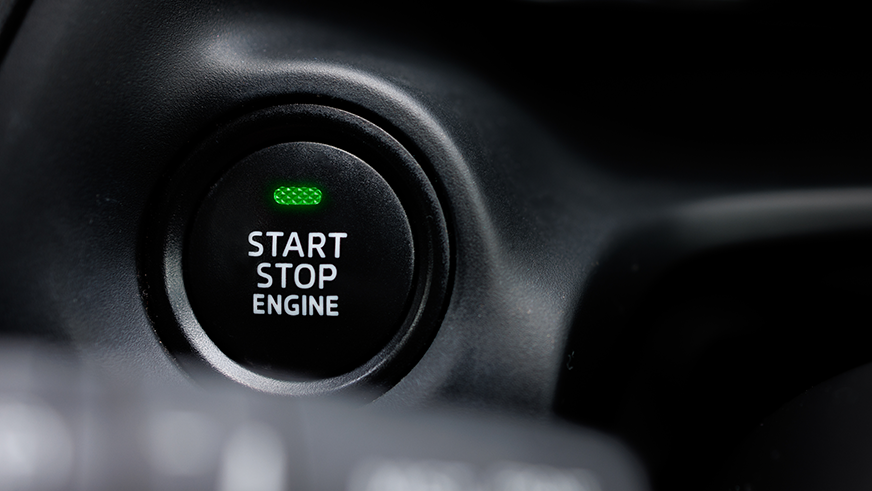
The excitement of embarking on a journey can quickly turn to frustration when your car greets you with clicking noises during the starting process. In this detailed guide, Mike Rezi Nissan Atlanta aims to demystify the reasons behind these clicks, providing expert insights and practical solutions. Explore the common causes, troubleshooting tips, and the commitment to excellent service that defines the Mike Rezi Nissan Atlanta experience.
Understanding Clicking Noises during Start-Up:
The audible clicks during the start-up process often serve as warning signs of underlying issues. Mike Rezi Nissan Atlanta emphasizes the importance of promptly diagnosing and resolving these issues to ensure a reliable and stress-free driving experience. Let’s delve into the common causes of clicking noises during start-up and how to address them effectively.
Common Causes of Clicking Noises during Start-Up:
Weak or Dead Battery:
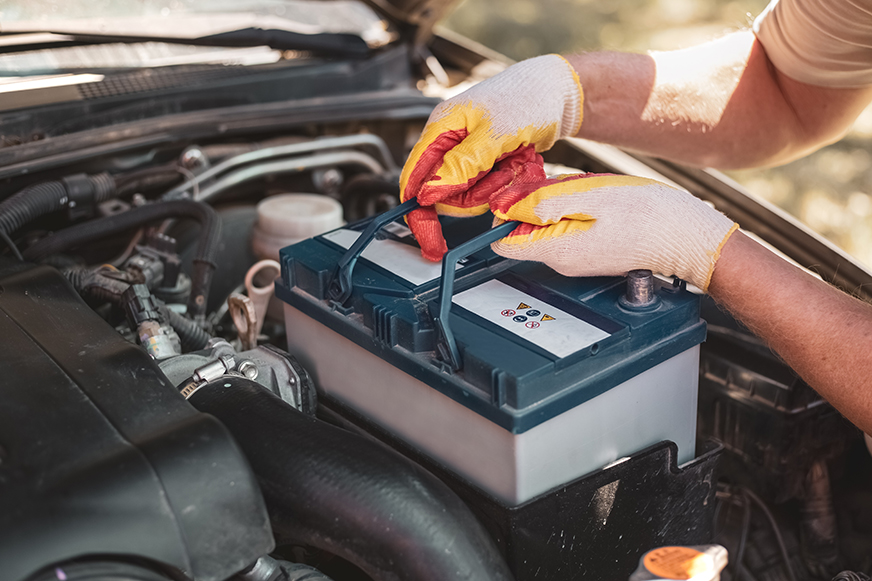
One of the primary culprits behind clicking noises is a weakened or dead battery. To address this, Mike Rezi Nissan Atlanta recommends checking the battery’s voltage and connections. Recharging or replacing the battery is often necessary to resolve the issue.
Faulty Starter Motor:
If you hear clicks but the engine doesn’t crank, a malfunctioning starter motor could be the cause. Inspection by Mike Rezi Nissan Atlanta’s technicians is crucial to identify visible damage and address any issues promptly, potentially requiring a starter motor replacement.
Issues with the Alternator:
An ineffective alternator can lead to a drained battery, causing clicking noises during start-up. Mike Rezi Nissan Atlanta suggests checking the alternator’s output and addressing any charging system issues to prevent recurring starting problems.
Corroded or Loose Battery Terminals:
Corroded or loose battery terminals can disrupt the flow of electricity. To resolve this, Mike Rezi Nissan Atlanta recommends cleaning and securing the battery terminals to ensure a reliable electrical connection during start-up.
Ignition Switch Problems:
Malfunctions in the ignition switch can lead to starting issues and clicking noises. Inspection by Mike Rezi Nissan Atlanta is crucial to identify signs of wear or damage, and prompt replacement is recommended if necessary.
Faulty Solenoid:
A malfunctioning solenoid can result in clicking noises during the start-up process. Mike Rezi Nissan Atlanta advises a comprehensive inspection of the solenoid and its connections, with replacement if needed.
FAQ Section:
Q1: Can I jump-start my car to resolve clicking noises during start-up?
A1: Jump-starting may help if the issue is a weak battery. Mike Rezi Nissan Atlanta recommends professional inspection if the problem persists.
Q2: How often should I replace my car battery to prevent starting issues?
A2: Battery lifespan varies, but Mike Rezi Nissan Atlanta suggests replacing it every 3 to 5 years to avoid unexpected starting problems.
Q3: What signs indicate a failing starter motor?
A3: Signs include clicking noises, slow cranking, or no response when turning the key. Mike Rezi Nissan Atlanta advises immediate inspection if these symptoms occur.
Q4: Can a corroded battery terminal cause clicking noises?
A4: Yes, corroded terminals can disrupt the electrical connection. Mike Rezi Nissan Atlanta recommends cleaning and securing terminals for a reliable connection.
Q5: Is a faulty ignition switch repairable?
A5: In some cases, yes. Mike Rezi Nissan Atlanta’s service experts will assess the condition and recommend repair or replacement based on the severity.
Q6: What role does the solenoid play in the starting process?
A6: The solenoid engages the starter motor. Mike Rezi Nissan Atlanta advises inspecting and replacing a faulty solenoid to resolve clicking noises.
Conclusion:
In conclusion, Mike Rezi Nissan Atlanta extends an invitation to prioritize the health of your vehicle’s starting system. By understanding and promptly addressing clicking noises during start-up, you ensure a reliable and stress-free driving experience. Visit our dealership for expert diagnostics, professional repairs, and a commitment to keeping your Nissan running smoothly.
Experience the Mike Rezi Nissan Atlanta difference, where automotive expertise meets unparalleled service. Trust us for all your service needs, and let us ensure your Nissan remains a paragon of reliability and performance.
Hello world!
Welcome to WordPress. This is your first post. Edit or delete it, then start writing!
Connect with us

